Here are some of my ideas on the world of European culinary culture – from the mind of a 22 year old University of Melbourne student who registers eating as one of his more prolific skills! Bon appétit, please enjoy!
Tartiflette – a taste of Alpine France
When it comes to French regional cuisine, nothing typifies the sense of rich, creamy indulgence like tartiflette, the French alpine specialty that you will find on just about every menu in the Savoie-Alpes region of France. The dish is made from potatoes, cream, onion, lardons, white wine – and, of course, about as much Reblochon cheese as you can get your hands on. It is served as a hearty, nourishing, powerful gratin-like potato bake, rich in fat and protein to thoroughly warm you up, or replenish yourself after a long day of hitting the slopes.
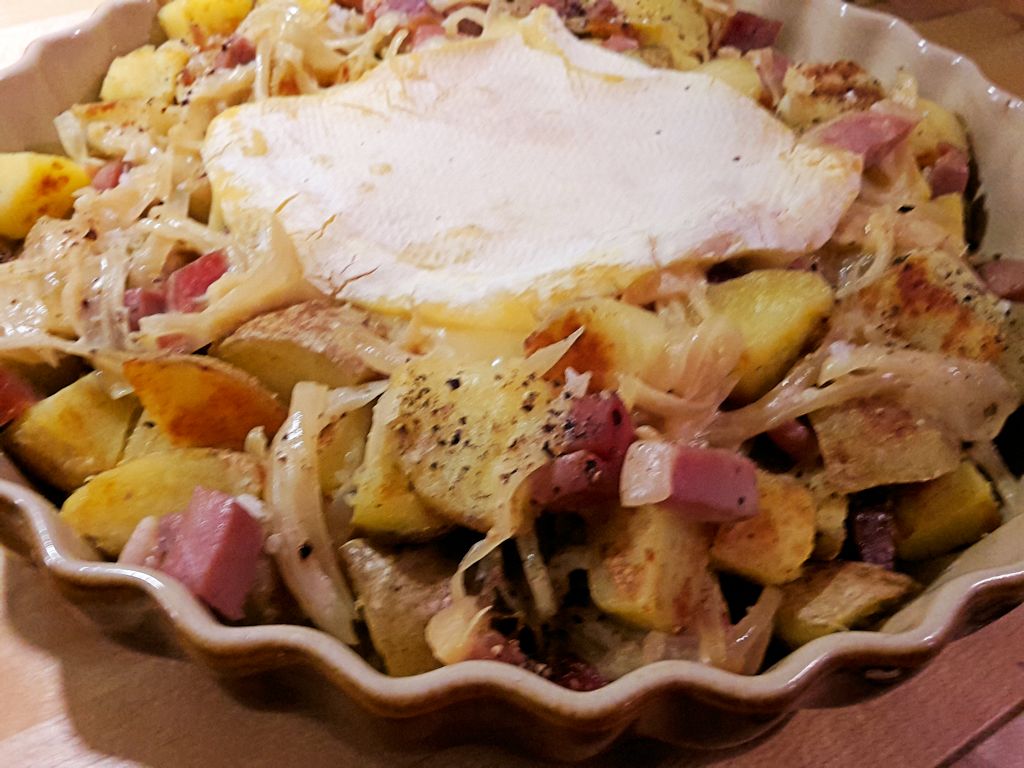
The prevalence of potatoes in French regional cuisine dates back to the 15th century, as a result of the Fall of Constantinople and the subsequent blocking of trade routes for spices and Eastern food imports. This forced French cuisine to rely heavily on the ingredients available to them, which after the Columbian exploitation of South American crops in 1482, included potatoes. The name of the dish comes from the Savoyard (Franco-Provençal dialect) word tartifla, which means potato.
Interestingly, the addition of Reblochon cheese to the traditional recipe, which was known as pela, is a result of promotion of the Syndicat Interprofessionnel du Reblochon in the 1980s, who managed to successfully redesign the recipe and its key ingredient. The cheese renders it essentially impossible to recreate a true tartiflette in Australia (whose laws prevent the importing of foreign raw milk products), and the cheese itself is also protected under French Appellation d’origine contrôlée laws, reflecting, like its name and history, the connection of the recipe to the region’s “terroir”.
The different faces of Lygon Street
Lygon St has perhaps the most renowned culinary identity of any of the foodscapes of Melbourne, if not Australia. It is a famously Italian migratory community which has developed its own culture distinct from that of its early pioneers’ motherland – Italy. Personally I have grown up on stories from my parents’ generation of the way it embodies Carlton’s lively culture and of the beautiful ‘authentic’ Italian food.
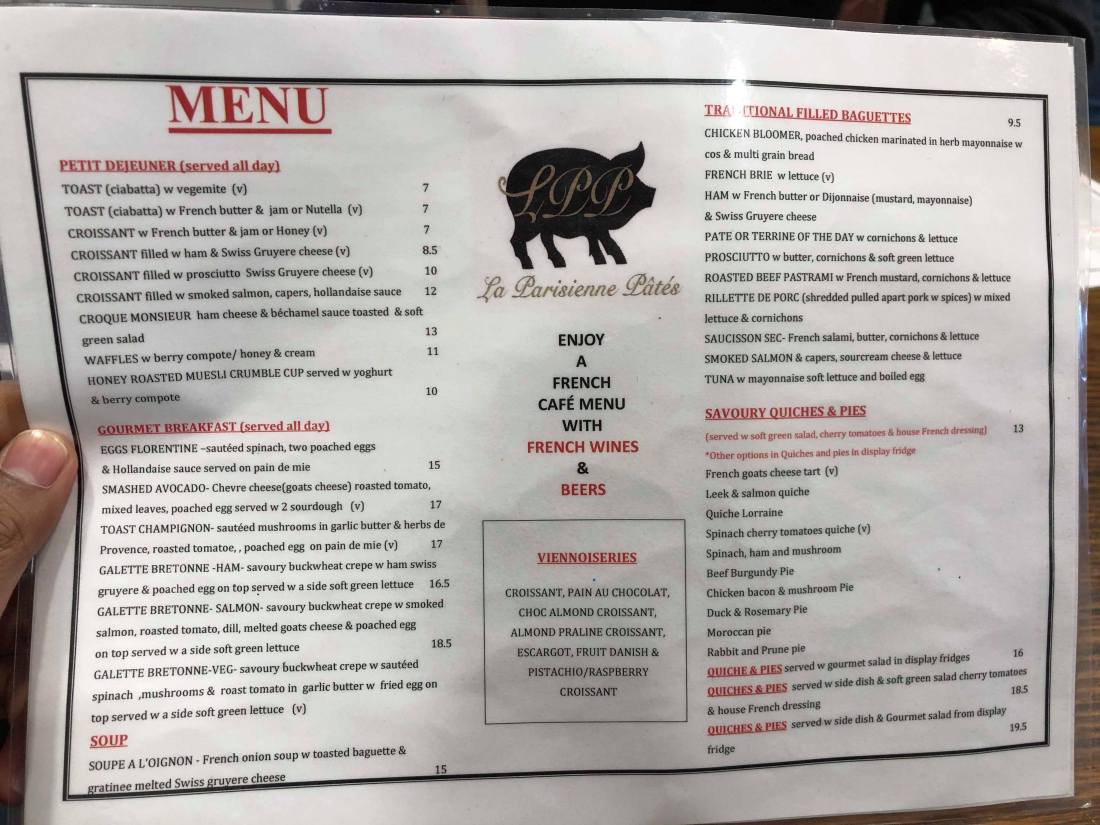
Our site visit aimed to interrogate this idea of perceived authenticity, and the different ways it is packaged to consumers and as part of the area’s local identity. We began by exploring the self-proclaimed “French Groumet Deli – La Parisienne Pâtés” – which modeled on a French charcuterie. The French venue stood out among its Italian neighbours but we were intrigued by the explicit promise of authenticity from the moment you walk in. We found that the consistent promise of authentic French meals and items on the menu and in the ambiance of the venue (the music and decor especially, which gave a sense of clichéd French culture), highlighted to us the sense of the paradox of authenticity – it felt contrived and to degree an excuse to increase the price of their food.
By contrast, the restaurant DOC, despite its clear Italian influence, did not explicitly identify itself as an authentic Italian restaurant, but encouraged patrons to “practise their Italian” with the staff. This was combined with a primarily Italian menu and Italian-speaking patrons, contributing to a jovial atmosphere that felt like a true celebration – rather than attempted imitation – of its heritage, and thus more of an experience of real Italy than La Parisienne’s self-proclaimed authentic experience.
Steak Tartare and the French appropriation of foreign cuisine
As well as being renowned for their culinary refinement, the French cuisine is famously weird and wacky. Steak tartare owes its fame to this, as do other weird French delicacies (escargots, frog legs, foie gras, and pâté are just a few!)
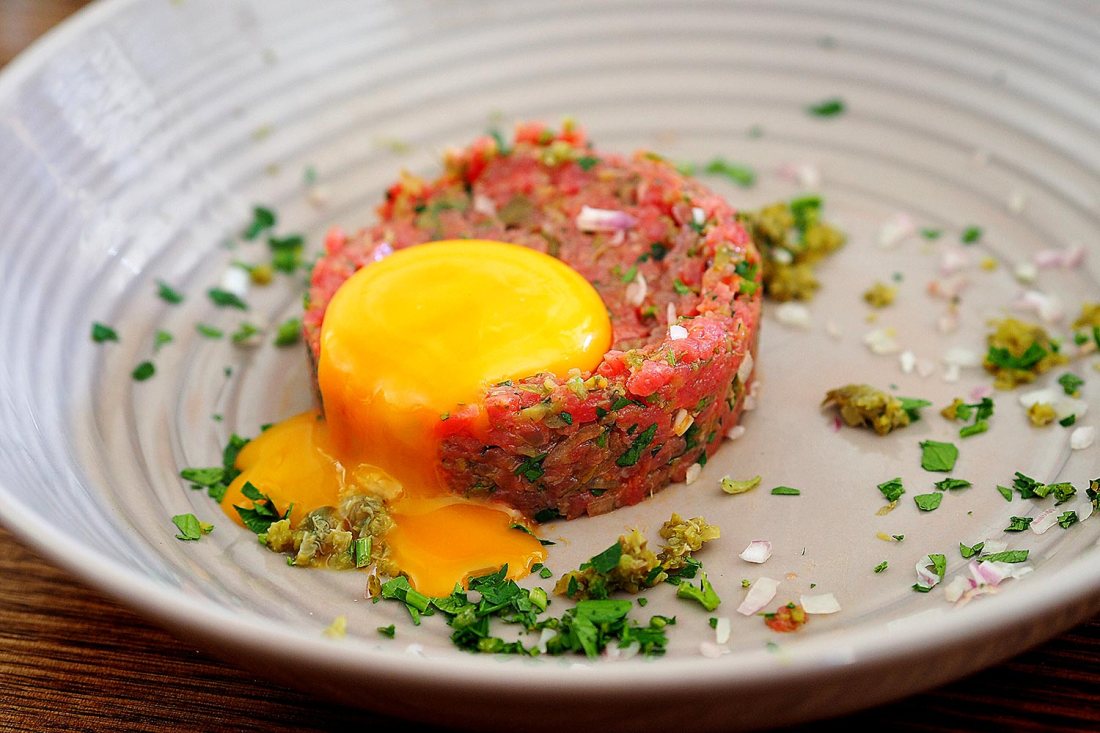
Many turn their nose up at the idea of eating raw meat with raw egg – who can blame them frankly? Despite its connection to French cuisine, the popularity of the meal is a result of the American Hamburg Steak, introduced around the late 1800s. This meal was very similar to a modern steak tartare – a raw, sometimes smoked, steak made from minced beef. The French appropriation of the American dish is a prime example of a recurring pattern in the development of French cuisine, a part of a system of culinary codification that caused French cuisine to be the envy of many other national cuisines. The American meal becomes French by adding a tartare sauce, and then rebranded steack à l’Américaine.
This pattern of renaming foreign food to include them in the French repertoire was a strong factor in establishing the French culinary hegemony, a practice established by Marie-Antoine Carême in his cookbook “Le Cuisinier Parisien”, said to have redefined French culinary nationalism. Sauces originating from Spain or Germany are rebranded sauce espagnole, or allemande, as though they were regions of France. Carême adds in his preface that while these sauces may have foreign origins, the French have perfected them. I think it’s an interesting concept that whilst the dish does not originate from regional France, its incorporation into the French cuisine’s repertoire in a sense treats it as a French regional dish.
Tartiflette à la Daniel
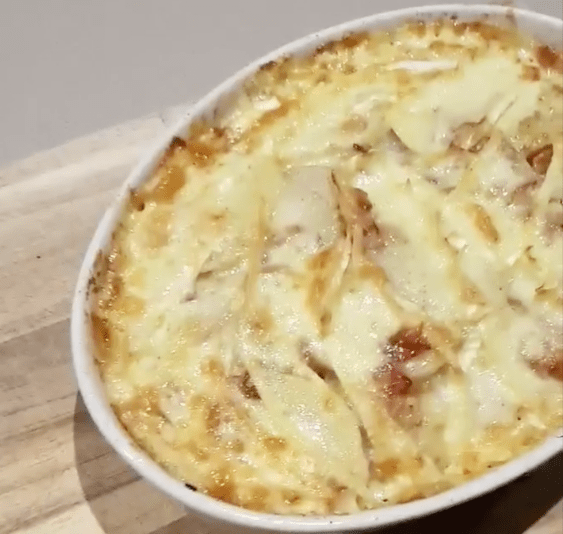
For the food fair, I prepared my version of tartiflette, a regional specialty of Savoie-Alpes, which is served all throughout regional France, particularly in the South. It is a little-known dish outside of France, however in my recent trip I noticed it was undoubtedly the most common plat du jour of restaurants and attracted the longest queues in all the Christmas markets I came across. As discussed in my first blog, the dish is native to the Savoie region, and originates from the more traditional pela, which is essentially the same dish without the lardon or cheese. It is a gratin-style baked dish, with copious cheese, lardons, and white wine and was very enjoyable and satisfying to make.
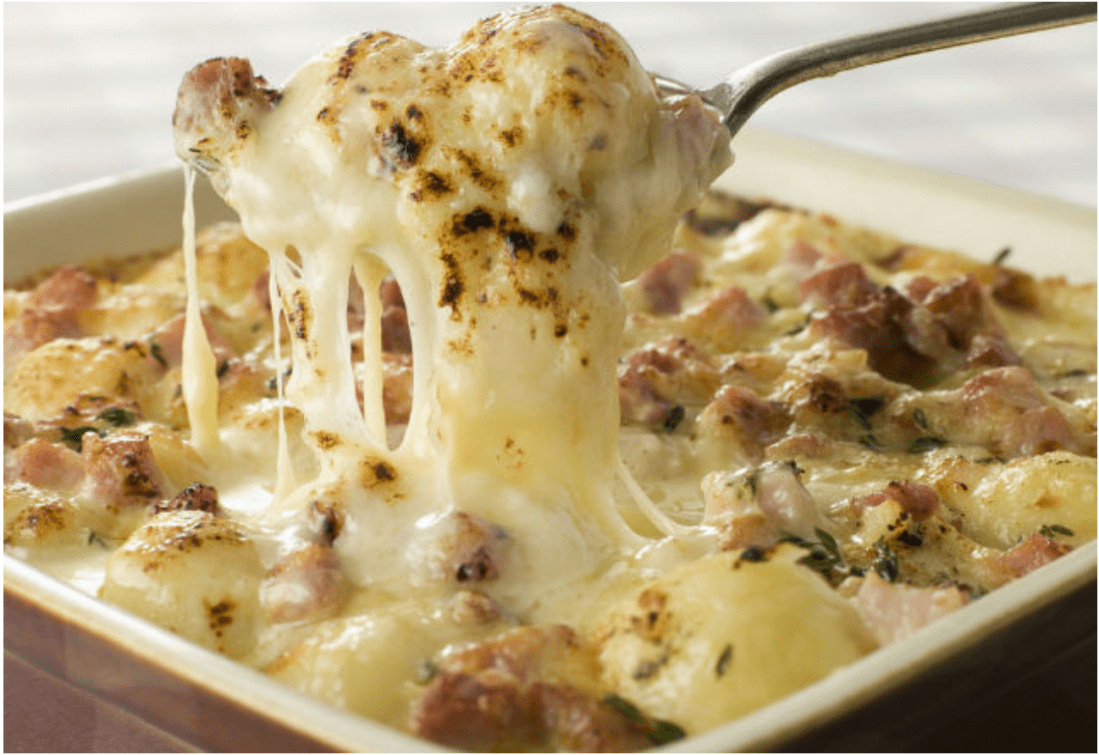
The dish calls for a very specific, Appellation d’Origine Contrôlée restricted cheese which cannot be imported into Australia, meaning that however much my dish may have resembled tartiflette, it cannot be sold or considered a true tartiflette. Instead of the Reblochon cheese which all recipes called for, I was forced to use a Camembert, which again could not have been a Camembert de Normandie under AOC laws. In spite of this, I enjoyed the experience of making it, and was surprised (given the unbelievable amount of cream and cheese in the recipe) to see that it was quite popular among other students. I presented it in the oven-proof ceramic dish in which I baked it, due to both the impracticality of transferring it, and to keep within the framework of a warming, replenishing regional Alpine dish, usually home-cooked and served in winter.
 A Taste of Europe - Daniel Power 833 152
