As well as being renowned for their culinary refinement, the French cuisine is famously weird and wacky. Steak tartare owes its fame to this, as do other weird French delicacies (escargots, frog legs, foie gras, and pâté are just a few!)
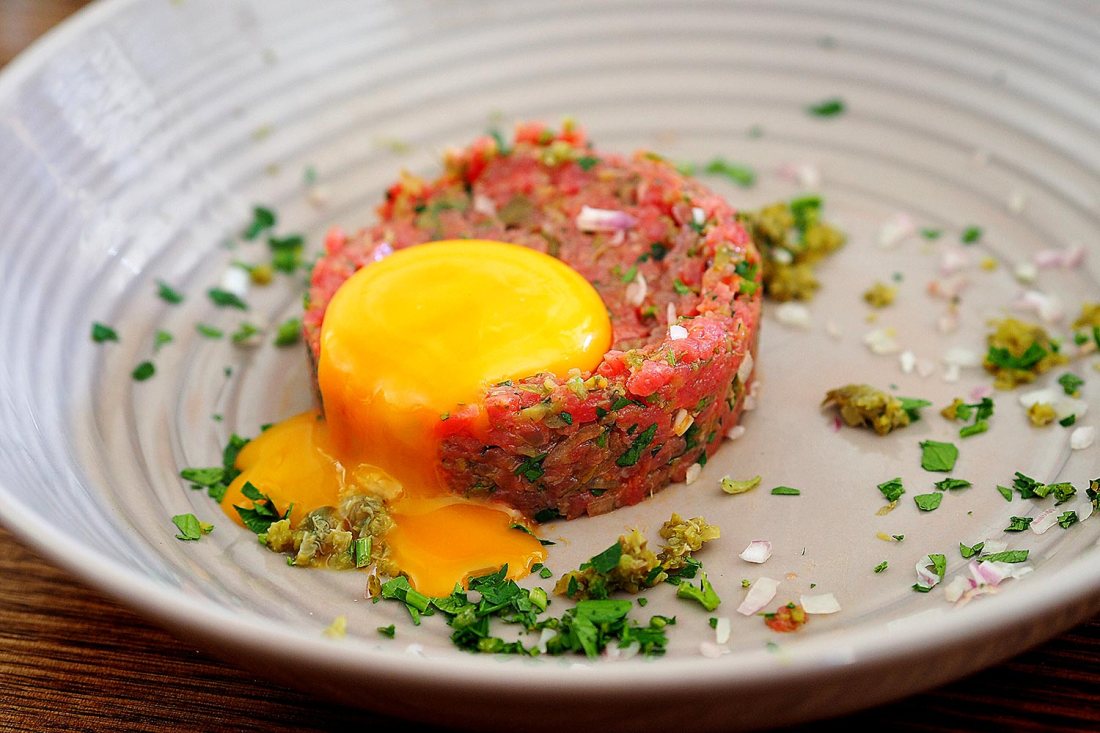
Many turn their nose up at the idea of eating raw meat with raw egg – who can blame them frankly? Despite its connection to French cuisine, the popularity of the meal is a result of the American Hamburg Steak, introduced around the late 1800s. This meal was very similar to a modern steak tartare – a raw, sometimes smoked, steak made from minced beef. The French appropriation of the American dish is a prime example of a recurring pattern in the development of French cuisine, a part of a system of culinary codification that caused French cuisine to be the envy of many other national cuisines. The American meal becomes French by adding a tartare sauce, and then rebranded steack à l’Américaine.
This pattern of renaming foreign food to include them in the French repertoire was a strong factor in establishing the French culinary hegemony, a practice established by Marie-Antoine Carême in his cookbook “Le Cuisinier Parisien”, said to have redefined French culinary nationalism. Sauces originating from Spain or Germany are rebranded sauce espagnole, or allemande, as though they were regions of France. Carême adds in his preface that while these sauces may have foreign origins, the French have perfected them. I think it’s an interesting concept that whilst the dish does not originate from regional France, its incorporation into the French cuisine’s repertoire in a sense treats it as a French regional dish.

 A Taste of Europe - Daniel Power 833 152